
The useful formula
A practical monthly estimate is input power in kilowatts multiplied by equivalent full-load hours per day, multiplied by days used, multiplied by your effective cost per kilowatt-hour. If a nameplate lists 1,200 watts, convert it to 1.2 kilowatts. Running at that input for five equivalent full-load hours over 30 days would use about 180 kWh before standby and other system effects. Multiply by the marginal rate that actually applies to those additional units on your current bill. Do not copy an old national average from a blog; tariffs, taxes and slab effects change.
Why operating hours are not the same as full-load hours
An inverter compressor normally changes output as the room approaches its set point. Eight clock hours of operation might represent fewer equivalent hours at rated input, but the relationship is not fixed. Outdoor temperature, thermostat setting, insulation, door opening, capacity, maintenance and minimum compressor speed all matter. For planning, calculate a low, middle and high scenario. This makes uncertainty visible and is more honest than promising one monthly figure.
Worked scenario
Suppose a bedroom unit lists 1.2 kW rated input and is used for eight evening hours. A middle planning scenario might treat that as five equivalent full-load hours: 1.2 × 5 × 30 = 180 kWh. A favourable room might average three equivalent hours, or 108 kWh; an exposed top-floor room could be closer to seven, or 252 kWh. Enter the effective per-unit cost from your latest bill in the calculator. The resulting range is an estimate, not a forecast, because future weather and billing rules are unknown.
Set point and room preparation
A very low thermostat setting does not make a room cool faster; it usually keeps the system working longer. Close unnecessary openings, use curtains against direct sun and clean filters according to the manual. Where safe and suitable, a fan can improve perceived comfort and allow a less aggressive set point. Address roof heat and air leaks before buying extra capacity. These measures reduce load without relying on a marketing claim about compressor technology.
Read the specification sheet carefully
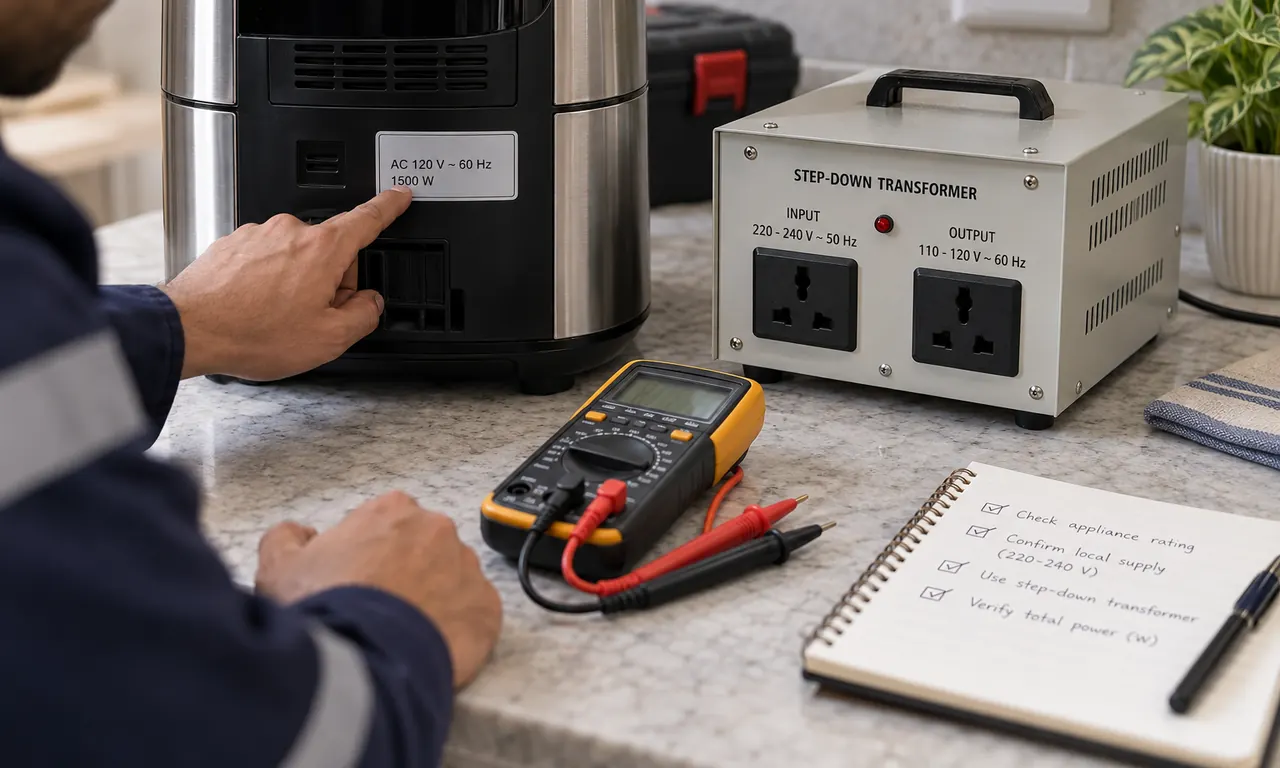
Compare cooling capacity and electrical input at stated test conditions. Efficiency labels and seasonal metrics can help compare models tested under the same framework, but they are not a personal bill prediction. Look for operating-temperature limits, standby consumption and warranty conditions. A marketplace title may omit these details, so open the manufacturer documentation for the exact model number. Imported 120 V equipment adds transformer losses and service risk and is usually a poor choice for a high-power AC installation.
Use your marginal tariff, not the bill average
Dividing the total bill by total units blends fixed charges, taxes and multiple slabs. The next 180 units may cost differently from the household’s average historical unit. Review the utility bill and current regulator or supplier schedule, then enter a reasonable marginal amount. If the tariff is unclear, calculate a range. The tool deliberately does not publish a “current Pakistan rate” because a single number would become stale and may not match your connection.
Editorial conclusion
An inverter AC can be a sensible choice when it is correctly sized and spends long periods modulating, but the label is not a savings guarantee. Our decision rule is to compare three things together: documented efficiency, a realistic room-load assessment and after-sales support. Treat any advertisement promising an exact percentage reduction without a baseline, test condition and model comparison as incomplete evidence.
Sources and verification
Sources checked on 18 October 2026. Product specifications, tariffs, shipping and regulations can change; verify volatile details before acting.
Our editorial order is based on the household decision, not commission. If you browse the category through a paid link, we may earn from a qualifying purchase at no added cost.
Browse Air Conditioners options