The quick answer
Room area is a useful starting point, not a complete AC specification. Measure the conditioned floor area in square feet, note ceiling height, identify afternoon sun and count regular occupants. Use the calculator on this page for a planning estimate, then have a competent installer confirm the heat load, electrical circuit, pipe route and drainage before purchase. A larger unit is not automatically safer: excessive capacity can produce short cycles, uneven temperatures and poor humidity control, while insufficient capacity may run continuously on the hottest days.
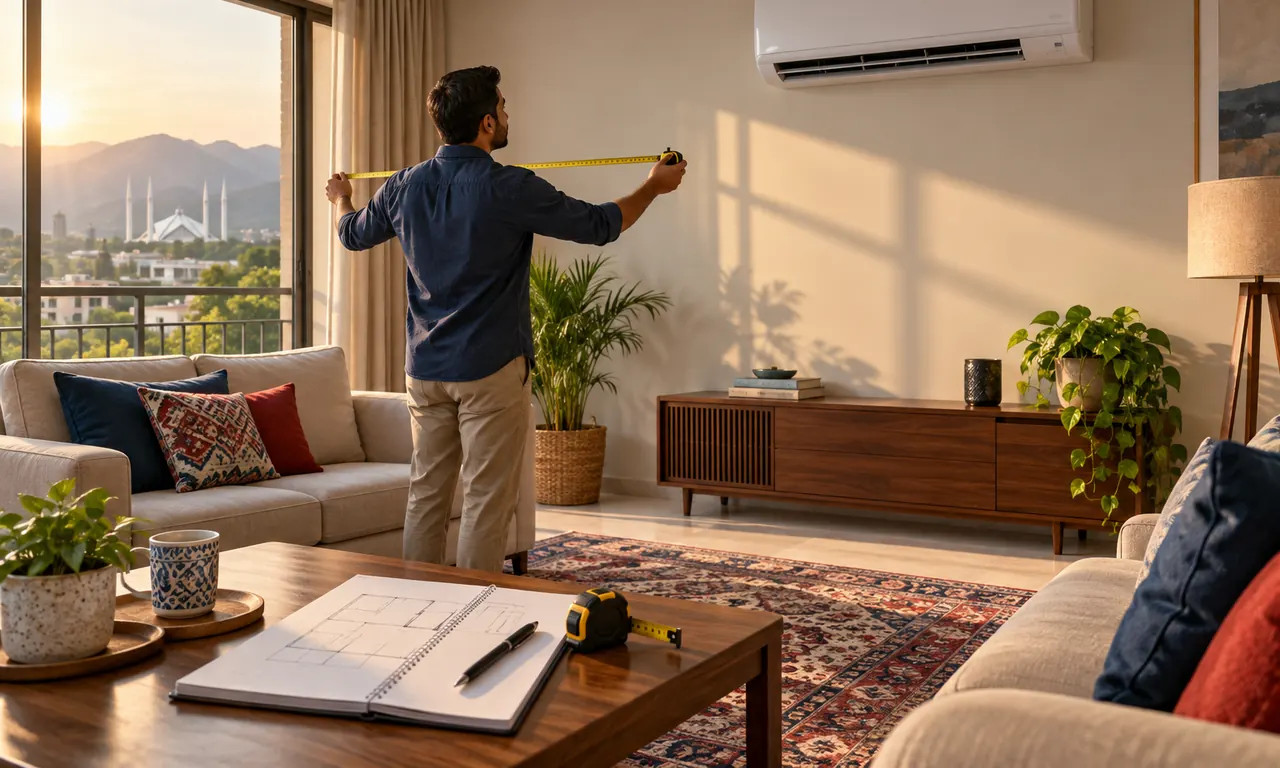
Measure the space that will actually be cooled
Measure internal length and width rather than reading dimensions from a property advertisement. Multiply the two figures to obtain floor area. For an L-shaped room, divide it into rectangles and add the areas. Include an open kitchen, corridor or connected sitting area when doors normally remain open. A 12 by 14 foot bedroom is 168 square feet; an open lounge measuring 14 by 18 feet is 252 square feet before any adjoining zone is added. Record the ceiling height as well, because a 12-foot ceiling contains roughly one third more air than a 9-foot ceiling over the same floor.
Adjust for Pakistan’s climate and building conditions
Two rooms with the same area can have different cooling loads. A top-floor room below an uninsulated roof, a west-facing window in Lahore, or large glazing in Karachi can add substantial heat. Shade, curtains, roof insulation and sealed gaps reduce that load. Humidity also changes comfort: coastal conditions may require longer, steadier operation for moisture removal, whereas a dry inland room may feel different at the same temperature. The calculator therefore uses a deliberately conservative 60 BTU/h per square foot hot-climate screening factor plus visible exposure adjustments; it is not a formal load calculation.
Worked room scenario
Consider a 14 by 16 foot first-floor bedroom: 224 square feet, a standard-height ceiling, two regular occupants and one shaded window. Its base estimate may fall near the boundary between common capacity bands. If the same room moves to the top floor, receives strong afternoon sun and contains a gaming computer, the adjusted estimate rises. Our editorial judgment is to solve cheap building problems first—shade the window, seal obvious air leakage and insulate the roof where feasible—then size the AC for the improved room rather than paying indefinitely to remove avoidable heat.
Why tonnage labels are only shorthand
Retail listings commonly group equipment as 1 ton, 1.5 ton or 2 ton, but the name does not describe real performance under every temperature. Compare the manufacturer’s stated cooling capacity, operating range and efficiency data for the exact model. Inverter equipment can vary compressor output, but it still needs to be appropriately sized. Do not assume an “inverter” label corrects a badly undersized installation or guarantees a particular bill. Installation quality, refrigerant piping, airflow, filters and outdoor-unit ventilation remain material.
Electrical and installation checks
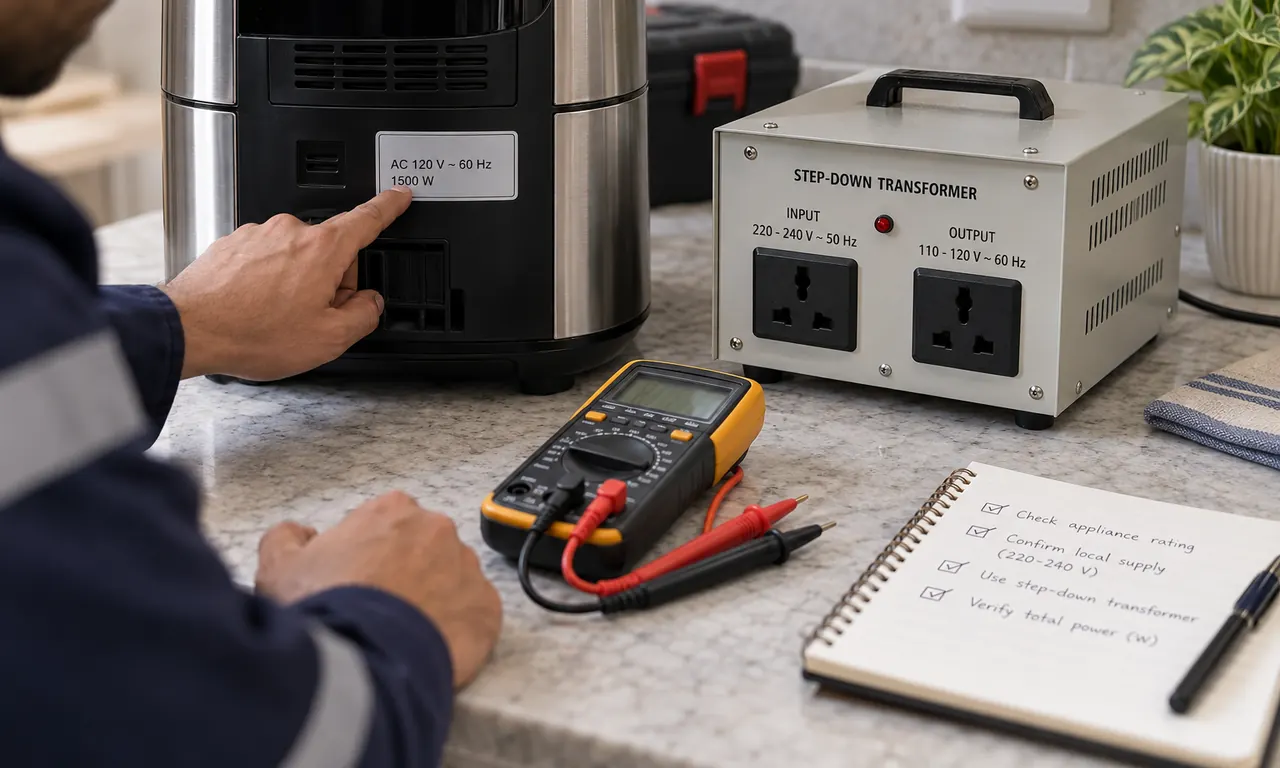
Confirm the nameplate input voltage and frequency, the required breaker and conductor size, earthing, surge protection and the manufacturer’s allowable pipe length. Pakistan’s household supply is commonly described as 230 V and 50 Hz, but local voltage quality and building wiring vary. A dedicated circuit may be required. The outdoor unit needs unrestricted airflow and secure support; the indoor unit needs a drain route that cannot leak into walls. These are tasks for a qualified installer, not a reason to improvise an adapter or extension lead.
Decision rule and limitations
Use the estimate to create a sensible shortlist, not to override engineering judgment. Choose the lower band only when the room has favourable shade, insulation and separation from adjacent spaces; move upward when several verified heat-load factors apply. If the result sits close to a boundary, ask the installer to document assumptions instead of automatically selling the larger unit. This guide does not calculate a formal Manual J or equivalent load and cannot inspect your building, wiring or local service conditions.
Sources and verification
Sources checked on 18 October 2026. Product specifications, tariffs, shipping and regulations can change; verify volatile details before acting.
Our editorial order is based on the household decision, not commission. If you browse the category through a paid link, we may earn from a qualifying purchase at no added cost.
Browse Air Conditioners options