Read the input line first
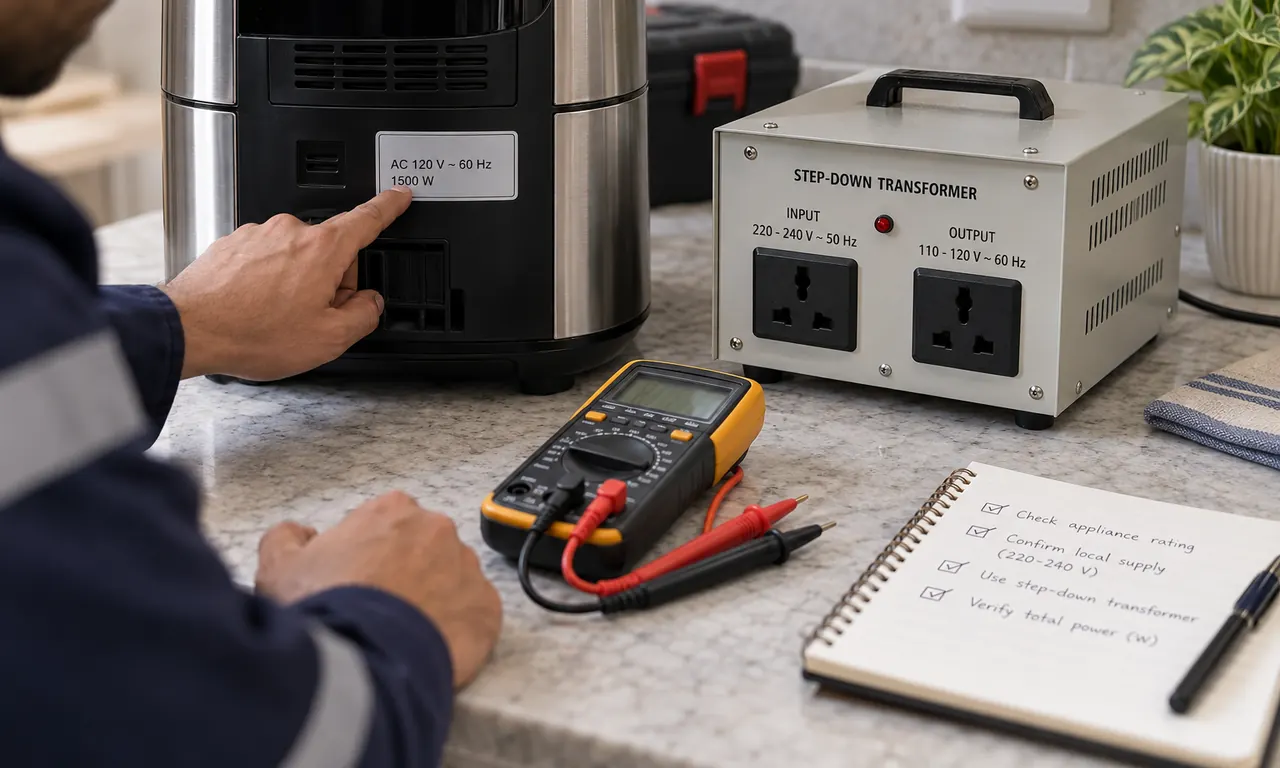
Find the manufacturer rating label or manual and read the input voltage, frequency and wattage. A label such as “100–240 V, 50/60 Hz” normally indicates a wide-range power supply, while “120 V, 60 Hz only” does not. Pakistan is generally associated with 230 V, 50 Hz supply. Never infer compatibility from the detachable cord, plug shape, marketplace location or the fact that a device uses electronics.
Adapter, converter and transformer are different
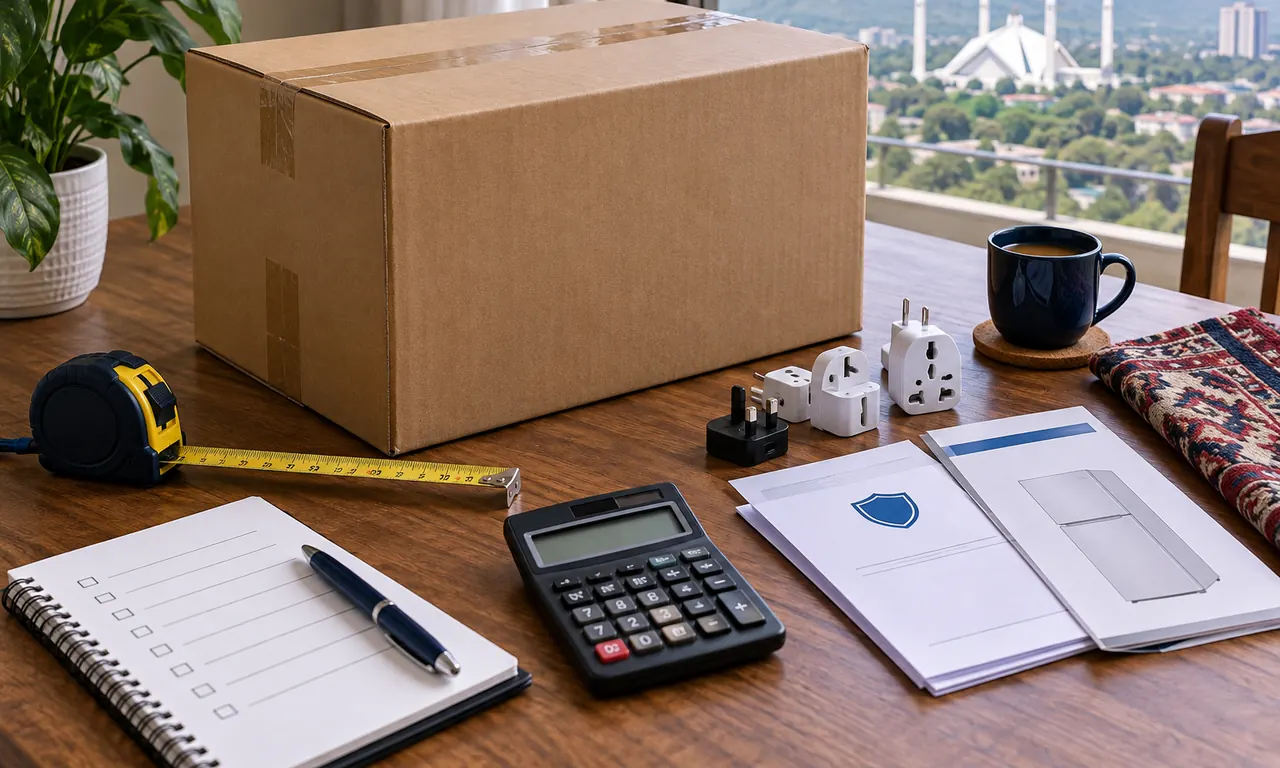
A travel adapter changes the physical plug interface. It does not reduce 230 V to 120 V. A voltage converter or transformer changes voltage, but must be suitable for the load, duration and appliance type. Motor, compressor and heating loads can impose starting or continuous demands that small travel converters cannot handle. Frequency-sensitive clocks, turntables and motors may still behave incorrectly even when voltage is transformed.
Worked air-fryer example
A 120 V air fryer rated at 1,500 W is a high continuous heating load. Connecting it through a simple plug adapter to 230 V is unsafe and likely destructive. A step-down transformer would need appropriate continuous capacity, protection, ventilation and margin, making the setup bulky and adding losses. Our editorial judgment is that importing a 120 V-only high-power heating appliance rarely makes sense when a 220–240 V version with local service is available.
Dual-voltage electronics
Many laptop and phone chargers accept a wide input range, but verify each unit individually. Replaceable cables do not prove the internal supply is universal. For a dual-voltage device, use a correctly rated plug solution and maintain earthing where required. Do not defeat an earth pin or use loose stacked adapters. Inspect for certification markings and buy accessories from reputable channels.
Frequency and appliance type
Resistive heating may be relatively insensitive to 50 versus 60 Hz once correct voltage is supplied, but timers, induction electronics, motors and compressors can behave differently. Manufacturer approval is the decisive evidence. Refrigerators, microwaves, washing machines and air conditioners are poor candidates for casual conversion because starting current, controls and warranty all matter. Ask the manufacturer about the exact model number, not the product family.
Use the compatibility checker
Enter the voltage range exactly as printed. If 230 V falls inside it and 50 Hz is supported, the tool marks the electrical range as potentially compatible—subject to plug, power, earthing and local certification checks. If the label says only 110–120 V, it flags specialist review. The result is intentionally conservative and cannot inspect equipment condition, building wiring or counterfeit labels.
Decision rule and safety boundary
Prefer a native 220–240 V, 50 Hz model for high-power, motor-driven or compressor appliances. Consider a transformer only when the manufacturer permits it and a qualified person specifies the complete installation. Never experiment by briefly plugging in the appliance. Purchase price is only one part of landed cost; transformer, protection, shipping, warranty and repair risk belong in the decision.
Sources and verification
Sources checked on 18 October 2026. Product specifications, tariffs, shipping and regulations can change; verify volatile details before acting.
Our editorial order is based on the household decision, not commission. If you browse the category through a paid link, we may earn from a qualifying purchase at no added cost.
Browse Air Fryers options