Prepare before the interruption
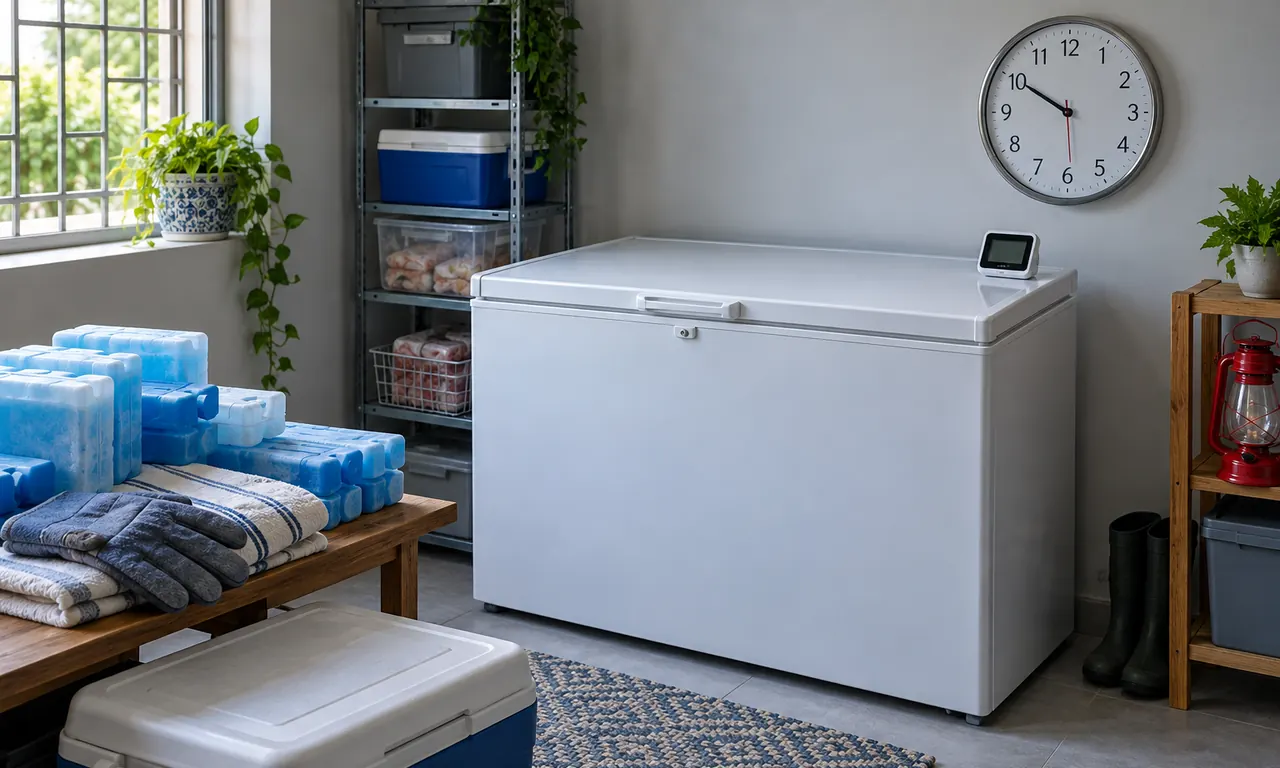
Keep a freezer thermometer inside, group food efficiently and know where frequently used items are located. A reasonably full freezer usually retains cold better than a nearly empty one, but air must still circulate according to the appliance instructions. Frozen water containers can occupy spare space without overloading shelves. Maintain a written rule for opening the lid so family members do not check repeatedly and release cold air.
Chest or upright
Chest freezers often retain cold well because dense cold air is less likely to spill out when the lid opens. Upright freezers provide easier organization and faster access. Neither format guarantees a specific holdover time: insulation, room temperature, load, seal condition and opening frequency matter. Choose the layout your household can keep organized, because long searches with the door open erase part of the theoretical advantage.
Worked outage scenario
Imagine a half-full freezer during a hot afternoon interruption. Rather than opening it every hour, note the start time, keep the lid closed and prepare coolers and ice for essential items. If power returns quickly, verify the internal temperature. If the interruption is prolonged, follow authoritative safety guidance on whether food still contains ice crystals or has remained at a safe temperature. Never taste food to decide whether it is safe.
Location and airflow
Place the freezer on a stable surface with the clearances required by the manual. A poorly ventilated compressor compartment or a very hot enclosed balcony can increase workload and reduce resilience. Keep the condenser area clean where the design permits user maintenance. Do not cover ventilation slots with stored goods. Check that the lid gasket seals evenly and replace a damaged seal through an appropriate service route.
Backup power is an electrical design question
A freezer has compressor starting current and cycling behaviour that a simple watt label may not fully describe. Do not size an inverter, UPS or generator from running watts alone. Ask a qualified person to confirm starting demand, waveform, earthing, changeover arrangement and runtime. Never operate fuel-powered generators indoors or near openings. The safest planning improvement is often insulation and disciplined door opening, not an improvised backup connection.
Inventory and rotation
Label food with dates and keep a simple inventory outside the freezer. Place older items where they are easy to reach. Separate raw meat from ready-to-eat food in leak-resistant packaging. A list shortens every opening and helps decide priorities during an extended interruption. It also prevents the freezer becoming a long-term archive of unidentified packages.
Editorial conclusion
For households facing intermittent supply, prioritize verified insulation, a reliable seal, accessible local service and a thermometer. Treat seller claims about many hours of retention as test-condition statements, not promises for every room and load. The most defensible purchase is the freezer whose capacity you can keep sensibly full and whose installation and recovery plan you understand.
Sources and verification
Sources checked on 18 October 2026. Product specifications, tariffs, shipping and regulations can change; verify volatile details before acting.
Our editorial order is based on the household decision, not commission. If you browse the category through a paid link, we may earn from a qualifying purchase at no added cost.
Browse Deep Freezers options